



Kolejne działania w celu zwiększenia bezpieczeństwa w regionie były tematem rozmowy ministra obrony Mariusza Błaszczaka z szefem Pentagonu Lloydem Austinem – poinformowało w poniedziałek MON.
„Dziś rozmawiałem z sekretarze obrony L. Austinem o kolejnych działaniach mających na celu wzmocnienie bezpieczeństwa w naszym regionie. Nasza obrona powietrzna ulegnie wzmocnieniu dzięki amerykańskim systemom PATRIOT przerzuconym na teren Polski” – napisał Błaszczak na Twitterze.
Dowództwo Europejskie Stanów Zjednoczonych (EUCOM) poinformowało o rozkazie relokacji do Polski dwóch baterii systemu obrony przeciwlotniczej i przeciwrakietowej Patriot, by „przeciwdziałać potencjalnym zagrożeniom” dla terytorium sojuszników w związku z wojną Rosji przeciw Ukrainie. „Na polecenie sekretarza obrony i zaproszenie naszych polskich sojuszników generał (Tod D.) Wolters, dowódca Europejskiego Dowództwa USA, rozkazał amerykańskim Wojskom Lądowym w Europie i Afryce przemieszczenie dwóch baterii Patriot do Polski” – oświadczyło EUCOM.
Dowództwo podkreśliło, że działanie ma charakter „defensywny i zapobiegawczy wobec wszelkich potencjalnych zagrożeń dla sił USA i sojuszników oraz ich terytorium” i „w żaden sposób nie będzie wspierało żadnych działań ofensywnych”.
Używany przez amerykańskie Wojska Lądowe system Patriot został wybrany przez Polskę w kwietniu 2015 r. W 2018 r. podpisano kontrakt na dostawę dwóch baterii (16 wyrzutni) zestawów Patriot. Wartość kontraktu zawartego w ramach pierwszej z dwóch zakładanych faz programu Wisła wyniosła 4,75 mld dolarów. Pierwsza bateria dla Polski ma zostać dostarczona w bieżącym roku.
Źródło: PAP


As European navies modernise their surface fleets, frigate programmes have become a litmus test for industrial governance, risk management and institutional maturity. Recent experience across the continent suggests that outcomes are shaped less by ambition or technology than by when and how complexity is confronted.
W artykule
Across major naval procurement programmes, frigate construction has increasingly been associated with schedule slippage, cost escalation and declining delivery confidence. This pattern is visible across several Western navies and reflects persistent structural pressures in how modern surface combatants are designed, contracted and brought into service.
In recent years, parliamentary oversight and official assessments have made these dynamics unusually transparent. In some cases, programmes advance physically-modules assembled, steel cut, keels laid—while formal delivery confidence ratings indicate that successful completion remains uncertain without corrective action.
Rather than focusing on individual programmes as isolated successes or failures, a more illuminating approach is to analyse the structural conditions under which delivery confidence deteriorates—or is preserved: when risk is deferred, how integration is sequenced, and how national industrial governance shapes programme behaviour over time.
One increasingly visible indicator of stress within naval procurement is the divergence between construction status and delivery confidence assessments. Situations have emerged where ships are already under construction, or even launched, while formal delivery confidence is categorised as red-indicating that, under current conditions, successful delivery appears unachievable without significant intervention.
This pattern is commonly associated with high degrees of concurrency: ship construction, workforce ramp-up, combat system integration and industrial modernisation advancing in parallel rather than sequentially. While such concurrency may appear to compress timelines, it also concentrates unresolved risk into the build and integration phases-precisely when options to adjust scope, sequencing or architecture are most constrained.
Public acknowledgements of inflationary pressure and integration risk, alongside assertions that programmes remain “in line with plans and forecasts”, illustrate a recurring tension: investment in facilities and integration capacity can mitigate risk, but also confirms that risk has not been eliminated-only displaced.
International experience suggests that the most persistent problems arise where three conditions coincide:
In such cases, delivery confidence tends to erode even as visible progress continues.
By contrast, programmes that prioritise architectural stability, incremental capability introduction and firm control of scope before construction begins tend to display greater predictability over time. This does not imply technological conservatism, but a governance choice to constrain variance rather than optimise capability early.
Within Europe, several frigate programmes are now referenced as illustrations of different risk-management logics rather than as national exemplars.
In comparative analyses of recent European frigate programmes, differences in delivery outcomes increasingly appear to correlate less with national ambition than with accumulated programme maturity and institutional learning.
While individual programmes are often discussed in isolation, international experience suggests that delivery outcomes are rarely explained by single design decisions or isolated industrial measures. More often, they reflect accumulated programme behaviour: a sequence of architectural choices, governance practices and institutional learning built up over time.
Programmes that appear stable in execution tend to share a common characteristic: they are not abrupt departures from earlier work, but the result of iterative development across multiple generations of ships, organisations and supply chains. Their relative execution predictability is therefore less a function of novelty than of continuity.
Incremental introduction of new technologies, firm control of design baselines prior to construction, and avoidance of radical mid-build modifications consistently emerge as decisive factors. Where such practices are embedded over long periods, they become organisational habits rather than ad‑hoc risk mitigations.
Certain European programmes are increasingly referenced in this context-not as outliers, but as illustrations of how sustained investment in digital design, systems engineering and integration discipline can translate into comparatively predictable execution, albeit within tightly governed frameworks that leave limited room for late-stage deviation.
The United Kingdom’s Type 31 frigate illustrates the tension between physical progress and delivery confidence. Despite visible milestones-launch events, modular construction and expanded shipyard capacity-official assessments in late 2025 assigned the programme a red delivery-confidence rating, indicating that successful delivery could not be assumed without corrective action.
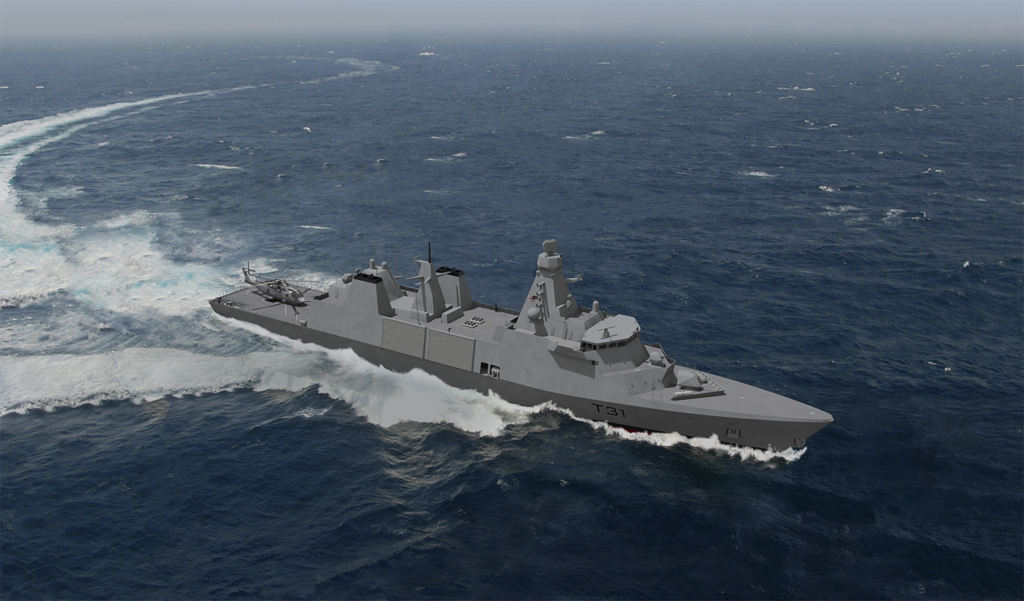
A substantial investment in shipyard modernisation and shore-based integration facilities has been presented as a mitigating measure. However, the juxtaposition of a red confidence rating with ongoing construction reflects a familiar structural pattern: concurrency sustains momentum while increasing the internal concentration of risk.
The French FDI frigate programme is often cited as evidence that schedule and cost discipline remain achievable in modern frigate construction. This assessment is broadly accurate but requires nuance.
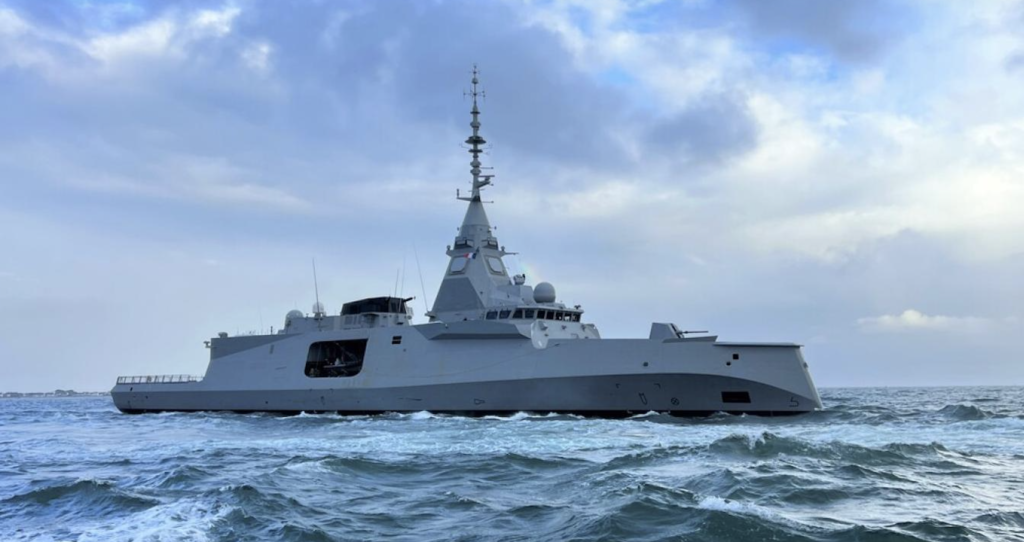
The relative predictability of FDI is based on a highly centralised governance model, strong design authority and strict scope control. These characteristics have limited design churn and supported execution stability. At the same time, they limit elasticity: configuration divergence and sovereign modification are feasible but procedurally demanding.
Thus, FDI represents a model of low variance but low elasticity: predictable and coherent, but less accommodating of rapidly evolving requirements.
Spanish F110 frigate: Importance of the industrial system
The Spanish F110 frigate is one of the cases frequently cited in recent comparative analyses. Its development did not begin with the current hulls but is based on a long sequence of surface‑combat programmes that progressively reduced uncertainty rather than accumulating it.
This suggests that programme maturity must be understood not only at the level of an individual ship, but also at the level of the industrial system that produces it. Where that system has already absorbed the learning curves associated with complex integration, subsequent programmes begin from a fundamentally different risk position.
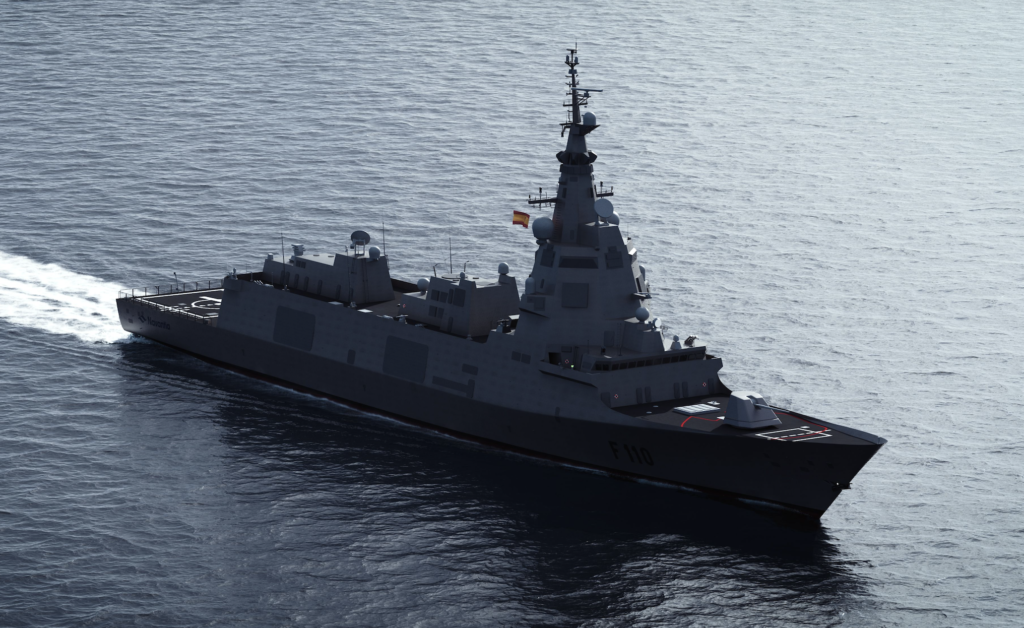
Seen from this perspective, contracting decisions are less about selecting a platform than about selecting an industrial trajectory-one in which predictability is the cumulative result of methodical, long-term effort rather than accelerated optimisation.
Poland’s Miecznik frigate illustrates a less forgiving variant of the same structural dynamic. Although based on an existing design line, the programme has been characterised by repeated revisions to cost assumptions, shifts in delivery timelines and an extended pre‑contract phase that has significantly shaped its risk profile.
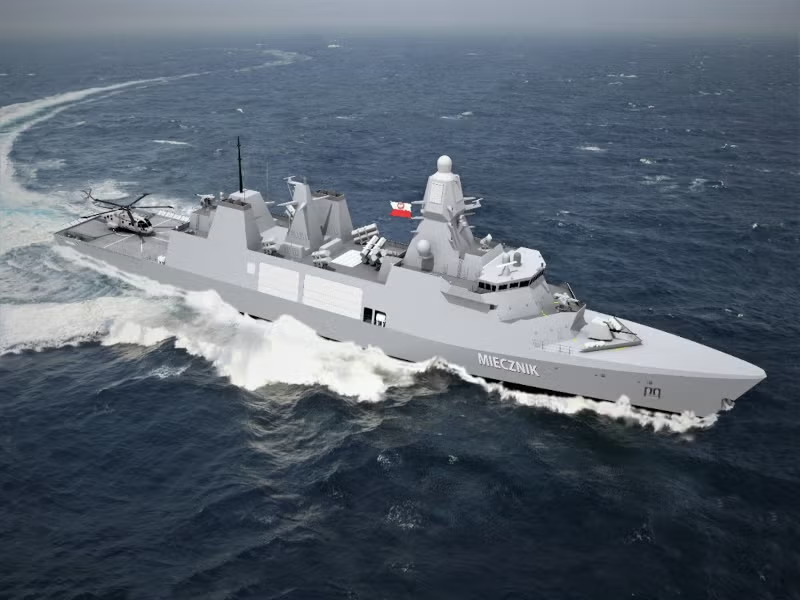
Open-source reporting and official disclosures indicate that the total programme value has increased substantially compared with initial estimates, with successive contract modifications reflecting evolving scope, system choices and industrial arrangements. Delivery milestones have likewise shifted to the right as design completion and industrial mobilisation advance.
These developments do not indicate programme failure. Rather, they suggest that risk has not been eliminated but redistributed. In Miecznik’s case, a significant portion of that risk appears to have emerged early through renegotiations and baseline revisions, rather than later through formal delivery‑confidence warnings. As a result, the programme enters its construction and integration phases with less schedule margin and greater sensitivity to sunk cost than originally envisaged.
Recent German frigate programmes add another dimension to the European landscape. Despite access to one of Europe’s most capable naval industrial bases, outcomes have been repeatedly shaped less by technology than by governance structure.
The F125 frigate entered service only after considerable delays and extensive post‑delivery remediation. Its successor, the F126, has so far shown familiar symptoms: cost increases, schedule delays and prolonged decision chains, despite the involvement of the experienced Damen Shipyards Group as prime contractor.
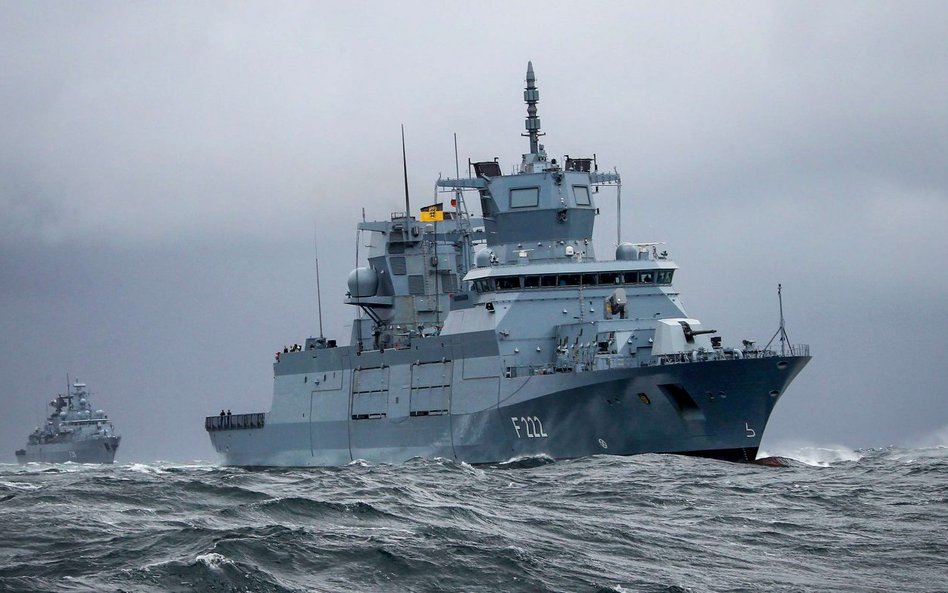
The German case is instructive because it removes simple explanations: even where design philosophies emphasise reuse and modularity, outcomes remain highly sensitive to clarity of design authority and sequencing discipline. Without these, complexity is not removed-it is merely displaced.
Taken together, recent European experience suggests that the decisive variable in frigate programmes is not ambition, but when risk is absorbed.
However, from a Central and Baltic European perspective, the challenge increasingly concerns time. The strategic environment in the Baltic Sea region continues to evolve faster than naval modernisation cycles allow, giving priority to early operational availability over theoretical final capability.
For neighbouring allies approaching major surface‑combatant decisions, including Sweden and Denmark, recapitalisation delays are therefore not a purely national concern. They affect the entire region, shaping deterrence, interoperability and collective resilience.